New Age – Messianic Christian Sects
New Age Movements: A surge of New Age Christian religious sects are popping up all over the globe and competing to convert uneducated to join them as they pursue missionizing in their membership drive. In another context ordinary people may even assume that a new sect of Jews are missionizing for Christian members to leave the historical churchs and join the members of Messianic Judaism. Another purpose of this agenda is to give their New Age Messianic Christian sect some form of credibility or make it believable if they have a few questionable Jews amongst them as a scapegoat for using the term Judaism in their campaigns.
Clearly, the majority of their new members are comprised of Ex practicing Christians who are leaving the historical churchs or left the historical organized Christian religions in droves, new age thinkers of no religious background and numerous others have left Islam to join their more lenient New Age messianic way of life.

People who have attended these messianic gatherings allege these New Age Chrisitian messianic movements are using selective concepts from scripture which they imply is to establish their “new” Canon and which is alien to authentic Torah or even Christian doctrine. In so doing these New Age Messianic sects are altering the Abrahamic Commandment – Genesis 12:3 and by the same token altering the eternal word of the Torah.
There are people who from observations of some sects and their services conclude the leaders misinterpret scripture and in some cases go to the extreme of defaming other religions and biblical text. In addition, without a doubt they have an agenda that is anti-Israel and totally anti Judaism which exists amongst these sects, as they launch a propaganda campaign for Israel’s demise from the map. Allegations have arisen that some “Messianic” leaders have been known to assist certain terrorist regimes in armament smuggling while vacationing in the Holy Land or Middle East.
The wiser Christians and non religious affiliations who walked out of these Messianic Christian services proclaim there are many “wow’s” – in these messianic services including the manipulation of the Torah and Christian doctrine. Forgive them for they don’t know what they are doing or do they?
In the late 20th and early 21st centuries, several small yet competing new religious movements, such as the Ebionite Community and others, have emerged claiming to be revivalists of the views and practices of early Christian sects, although their idiosyncratic claims to authenticity cannot be verified.
The counter-missionary group - Jews for Judaism mentions the historical Ebionites in their literature in order to argue that “Messianic Judaism”, as promoted by missionary groups such as Jews for Jesus, is Pauline Christianity misrepresenting itself as Judaism. Some Messianic groups have expressed concern over leaders in Israel that deny Jesus’ divinity and the possible collapse of the Messianic movement due to a resurgence of Ebionitism. In a recent polemic, a Messianic leader asked whether Christians should imitate the Torah-observance of “neo-Ebionites”. Outreach Judaism is another organization that provides the truth to seekers of it.

To reject modern Christianity, as having been led astray from “normative” theology by Paul of Tarsus.
To lay claim to a Torah-based structure of belief in which some Mosaic book sections are rejected and some are more emphasized in a “non-normative” way.
There has been a history of sexual, physical and mental abuse carried out by Christian clergy on children, adults and aboriginal peoples
Because of a belief that the term was used to describe Gentile believers in Jesus in earliest times, even though they believe they are in unity with the modern Christian faith.
And the whole concept is probably financially lucrative for the CEO’s of these organizations.
————————————-
Following are examples of New Age or Messianic concepts and thinking;
The Ebionites: The term Ebionites derives from the Hebrew Evionim, meaning “the Poor Ones”, which has parallels in the Psalms and the self-given term of pious Jewish circles.
The term “the poor” was at first a common designation for all Christians – a reference to their material as well their voluntary poverty. Following schisms within the early Church, the graecized Hebrew term “Ebionite” was applied exclusively to Christians separated from the developing Pauline Christianity, and later in the fourth century a specific group of Christians or to a Christian sect distinct from the Nazarenes. All the while, the designation “the Poor” in other languages was still used in its original, more general sense. Origen says “for Ebion signifies “poor” among the Jews, and those Christians who have received Jesus as Christ are called by the name of Ebionites.” Tertullian inaccurately derived the name from a fictional heresiarch called Ebion.
Without authenticated archaeological evidence, attempts to reconstruct their history have been based on textual references, mainly the writings of the Church Fathers. They said that the Ebionites used an altered Gospel according to the Hebrews [1]. The earliest reference to a group that might fit the description of the Ebionites appears in Justin Martyr’s Dialogue with Trypho (c. 140). Justin distinguishes between Christians who observe the Law of Moses but does not require its observance upon others, and those who believe the Mosaic Law to be obligatory on all. Irenaeus (c. 180) was probably the first to use the term “Ebionites” to describe a heretical judaizing sect, which he regarded as stubbornly clinging to the Law. Origen (c. 212) remarks that the name derives from the Hebrew word “evyon,” meaning “poor.” Epiphanius of Salamis in the 4th century gives the most complete but also questionable account in his heresiology called Panarion, denouncing eighty heretical sects, among them the Ebionites. Epiphanius mostly gives general descriptions of their religious beliefs and includes quotations from their gospels, which have not survived. According to the Encyclopaedia Britannica, the Ebionite movement may have arisen about the time of the destruction of the Jewish Temple in Jerusalem (AD 70).
Others have argued that the Ebionites were more faithful to the authentic teachings of Jesus and constituted the mainstream of the Jerusalem church before being gradually marginalized by the followers of Paul of Tarsus.
The actual number of groups described as Ebionites is difficult to ascertain, as the contradictory patristic accounts in their attempt to distinguish various sects, sometimes confuse them with each other. Other groups mentioned are the Carpocratians, the Cerinthians, the Elcesaites, the Nazarenes, the Nazoraeans, and the Sampsaeans, most of whom were Christian sects who held gnostic or other views rejected by the Ebionites. Epiphanius, however, mentions that a group of Ebionites came to embrace some of these views despite keeping their name.
As the Ebionites are first mentioned as such in the 2nd century, their earlier history and their relation to the first Jerusalem church remains obscure and a matter of contention. Many scholars link the origin of the Ebionites with the First Jewish-Roman War. Prior to this, they are considered to be part of the Jerusalem church led by the Apostle Peter and later by Jesus’ brother, or cousin, James. Eusebius relates a tradition, probably based on Aristo of Pella, that the early Christians left Jerusalem just prior to the war and fled to Pella beyond the Jordan River. They were led by Simeon of Jerusalem (d. 107) and during the Second Jewish-Roman War, they were persecuted by the Jewish followers of Bar Kochba for refusing to recognize his messianic claims.

According to these scholars, it was beyond the Jordan, that the Nazarenes/Ebionites were first recognized as a distinct group when some Christians receded farther from mainstream Christianity, and approximated more and more closely to Rabbinical Judaism, resulting in a “degeneration” into an exclusively messianic sect. Some from these groups later opened themselves to either Gnostic (and possibly Essene) or syncretic influences, such as the book of Elchasai. The latter influence places some Ebionites in the context of the gnostic movements widespread in Syria and the lands to the east.
After the end of the First Jewish-Roman War, the importance of the Jerusalem church began to fade. Christianity became dispersed throughout the diaspora in the Levant, where it was slowly eclipsed by gentile Christianity, which then spread throughout the Roman Empire without competition from “judaizing” Christian groups. Once the Jerusalem church, still headed by Jesus’ relatives, was eliminated during the Bar Kokhba revolt in 135, the Ebionites gradually lost influence and followers. Their decline was due to marginalization and “persecution” by other sects. Following the defeat of the rebellion and the expulsion of all Jews from Judea, Jerusalem became the Gentile city of Aelia Capitolina. Many of the
Christians residing at Pella renounced their Jewish practices at this time and joined to the mainstream Christian messianic church. Those who remained at Pella and continued in obedience to the Law were deemed heretics. In 375, Epiphanius records the settlement of Ebionites on Cyprus, but by the mid-5th century, Theodoret of Cyrrhus reported that they were no longer present in the region
Some scholars allege that the Ebionites survived much longer and identify them with a sect encountered by the historian Abd al-Jabbar around the year 1000. Another possible reference to surviving Ebionite communities in northwestern Arabia, specifically the cities of Tayma and Tilmas, around the 11th century, appears in Sefer Ha’masaot, the “Book of the Travels” of Rabbi Benjamin of Tudela, a rabbi from Spain.
A 12th century Muslim historian Muhammad al-Shahrastani mentions people living in nearby Medina and Hejaz who accepted Jesus as a prophetic figure and followed traditional Judaism, rejecting mainstream Christian views.
Some scholars assume that they contributed to the development of the Islamic view of Jesus due to exchanges of Ebionite remnants with the first Muslims. However, Muslim theologians and those who accept their narratives of early Islam maintain that the Islamic view of Jesus was revealed in the Quran well before any significant Muslim encounter with Christians such as the Migration to Abyssinia.
Judaic and Gnostic Ebionitism: Most patristic sources portray the Ebionites as traditional ascetic Jews, who zealously followed the Law of Moses, revered Jerusalem as the holiest city, and restricted table fellowship only to Gentiles who converted to Judaism. They celebrated a commemorative meal annually, on or around Passover, with unleavened bread and water only, in contrast to the daily Christian Eucharist.
Epiphanius of Salamis is the only Church Father who describes Ebionites as departing from traditional Jewish principles of faith and practice; specifically by engaging in excessive ritual bathing, possessing an angelology which claimed that the Christ is a great archangel who was incarnated in Jesus and adopted as the son of God, opposing animal sacrifice, denying parts or most of the Law, and practicing religious vegetarianism.
The reliability of Epiphanius’ account of the Ebionites is questioned by some scholars. For example, the heterodox views and practices ascribed to some Ebionites originated in Gnostic Christianity and are characteristics of the Elcesaite sect, which Epiphanius mistakenly attributed to the Ebionites.
Regarding the Ebionites specifically, a number of scholars have different theories on how the Ebionites may have developed from an Essene messianic sect. Hans-Joachim Schoeps argues that the conversion of some Essenes to Christianity after the Siege of Jerusalem in 70 CE may be the source of some Ebionites adopting Essene views and practices; while some conclude that the Essenes did not become Christians but still had an influence on the Ebionites.
Jesus: The majority of Church Fathers agree that the Ebionites rejected many of the central Christian views of Jesus such as the pre-existence, divinity, virgin birth, atoning death, and physical resurrection of Jesus. The Ebionites are described as emphasizing the oneness of God and the humanity of Jesus as the biological son of both Mary and Joseph, who by virtue of his righteousness, was chosen by God to be the messianic “prophet like Moses” (foretold in Deuteronomy 18:14–22) when he was anointed with the Holy Spirit at his baptism.
Of the books of the New Testament, the Ebionites are said to have accepted only a Aramaic version of the Gospel of Matthew, referred to as the Gospel of the Hebrews, as additional scripture to the Hebrew Bible. This version of Matthew, Irenaeus reports, omitted the first two chapters (on the nativity of Jesus), and started with the baptism of Jesus by John.
The Ebionites believed that all Gentiles must observe the commandments in the Law of Moses, in order to become righteous and seek communion with God, but these commandments must be understood in the light of Jesus’ expounding of the Law, revealed during his sermon on the mount, and other evangelical counsels. The Ebionites may have held a form of “inaugurated eschatology” positing that the ministry of Jesus had ushered in the Messianic Age so that the kingdom of God might be understood as present in an incipient fashion, while at the same time awaiting consummation in the future age.
James versus Paul: James, the brother, or cousin, of Jesus, was the leader of the Jerusalem church. Paul, Apostle to the Gentiles, established many churches and founded a Christian theology (Pauline Christianity). At the Council of Jerusalem (c 49), Paul argued to abrogate Mosaic observances for his non-Jewish converts.

When Paul recounted the events to the Galatians (Galatians 2:9-10), he referred only to the remembrance of the poor rather than conveying the four points of the council (Acts 15:19-21). The nature of the laws for the Gentiles described by James is contested (Council of Jerusalem).
The issue of the observance of Mosaic law by Gentile converts remained unresolved (Acts 21:21), with Paul agreeing to James’ request to lead a group of Greeks in carrying out Nazarite vows in order to for Paul to prove his adherence to the law. James reiterated (Acts 21:25) the four points of the earlier council, saying that Gentiles were not required to perform the Nazarite vows. The uproar that followed ended with Paul being rescued from the people of Jerusalem by Roman centurions (Acts 21:30-35).
Some scholars allege that the Ebionites regarded James, brother, or cousin of Jesus, the first bishop of Jerusalem, the rightful leader of the Church rather than Peter. James Tabor argues that the Ebionites claimed a unique dynastic apostolic succession for the relatives of Jesus.
They opposed the Apostle Paul, who claimed that gentiles/Christians did not have to be circumcised or otherwise follow the Law of Moses, and named him an apostate.
Epiphanius relates that some Ebionites alleged that Paul was a Greek who converted to Judaism in order to marry the daughter of a high priest of Israel but apostasized when she rejected him.
Few writings of the Ebionites have survived, and these are in uncertain form. The Recognitions of Clement and the Clementine Homilies, two 3rd century Christian works, are regarded by general scholarly consensus as largely or entirely Christian in origin and reflect Christian beliefs. The exact relationship between the Ebionites and these writings is debated, but Epiphanius’s description of some Ebionites in Panarion 30 bears a striking similarity to the ideas in the Recognitions and Homilies. Scholar Glenn Alan Koch speculates that Epiphanius likely relied upon a version of the Homilies as a source document.
The Catholic Encyclopedia classifies the Ebionite writings into four groups:
The Gospel of the Ebionites: According to Irenaeus, the Ebionites used only the Gospel of Matthew. Eusebius of Caesarea mentions a Gospel of the Hebrews, often identified as the slightly modified Aramaic original of Matthew, written with Hebrew letters. Such a work was known to Hegesippus, Origen and to Clement of Alexandria. Epiphanius of Salamis attributes this gospel to Nazarenes, and claims that Ebionites only possessed an incomplete, falsified, and truncated copy. The question remains whether Epiphanius was able to accurately distinguish between Nazarenes and Ebionites.
Apocrypha of the New Testament: The Circuits of Peter and Acts of the Apostles, including the work usually titled the Ascents of James. The first-named books are substantially contained in the Homilies of Clement under the title of Clement’s Compendium of Peter’s itinerary sermons, and also in the Recognitions attributed to Clement. They form an early Christian didactic fiction to express Christian views, i.e. the primacy of James the Just, their connection with the episcopal see of Rome, and their antagonism to Simon Magus, as well as gnostic doctrines. Scholar Robert E. Van Voorst opines of the Ascents of James (R 1.33–71), “There is, in fact, no section of the Clementine literature about whose origin in Jewish Christianity one may be more certain”. Despite this assertion, he expresses reservations that the material is genuinely Ebionite in origin.
The Works of Symmachus the Ebionite: Symmachus produced a translation of the Hebrew Bible into Koine Greek, which was used by Jerome and is still extant in fragments, and Hypomnemata written to counter the canonical Gospel of Matthew. The latter work, which is totally lost is probably identical with De distinctione præceptorum mentioned by Ebed Jesu (Assemani, Bibl. Or., III, 1).
The Book of Elchesai claimed to have been written about 100 CE and brought to Rome in c. 217 CE by Alcibiades of Apamea. Ebionites deemed those who accepted its gnostic doctrines apostates.
Some also speculate that the core of the Gospel of Barnabas, beneath a polemical medieval Muslim overlay, may have been based upon an Ebionite or gnostic document. The existence and origin of this source continues to be debated by scholars.
The mainstream Christian view of the Ebionites is based on the polemical views of the Church Fathers who portrayed them as heretics for rejecting many of the central Christian views of Jesus, and allegedly having an improper fixation on the Law of Moses at the expense of the grace of God. In this view, the Ebionites may have been the descendants of a Christian sect within the early Jerusalem church which broke away from its mainstream theology.
The mainstream view of the Ebionites is that they were heretics due to their refusal to see Jesus as a false prophet and failed the Messiah claimant but also for wanting to include their gospel into the canon of the Hebrew Bible.
Some scholars (secular or from mainstream Christianity) are acknowledging the recent emphasis on the Jewishness of Jesus and his earliest followers, and commenting on how they reconciled the Jewish Jesus with the Christ of faith. On the other hand, some Christian apologists have criticized the quest for the historical Jesus as having resulted in a “revival of the Ebionite heresy
——————————

In contemporary Israeli Hebrew, the term “Notzri” is likely to be derived from or related to “Nazarene” and is the general word for “Christian”.
In all Arab countries Christians are called “Nasara” Plural of Nasrani. The term “Nasara” is used many times in the Qur’an when referring to Christians, which may be a corruption of the word Nazarene.
It may also be mentioned that the Quran clearly alludes to the fact that the word Nasaara has its origin in the Arabic word Nasr which means to bring victory. This is made clear in Surat Al Saff (the 61st chapter of the Quran) when Jesus is quoted as saying, “Who are my ansaar (victors) to Allah. The disciples said we are the ansaar (victors) of Allah.” And so they called themselves Nasaara because of that. This would suggest that the origin of the word does not relate to the place of Nazareth but to the concept of giving victory to God.
According to the standard reference for Koine Greek, the Greek-English Lexicon of the New Testament: Nazoraios (plural: Nazoraioi) is translated into English as:”Nazoraean,
Nazarene, quite predominantly a designation of Jesus, in Matthew, John, Acts and Luke 18:37, while Mark as (“coming from Nazareth”). Of the two places where the later form occurs in Luke, the one, Luke 4:34, apparently comes from Mark (1:24), the other, 24:19, perhaps from a special Greek source.
Matthew says expressly 2:23 that Jesus was so called because he grew up in Nazareth. In addition, the other NT writers who call Jesus Nazoraios know Nazareth as his home. But linguistically the transition (Nazareth) is difficult and it is meant something different before it was connected with Nazareth. According to Acts 24:5 the Christians were so called “Nazirites”
In all, the following derivations have been suggested:
The place-name Nazara (which later became Nazareth), as in the Greek form Iesous Nazarenos. This is the traditional interpretation within mainstream Christianity, and it still seems the obvious interpretation to many modern Christians. Matthew 2:23 reads that “and he went and lived in a town called Nazareth. So was fulfilled what was said through the prophets: “He will be called a Nazarene”" (NIV) (Greek is Nazoraios).
The word nazur means separate in Aramaic. The word is related to Nazir. There are a number of references to Nazirites/Nazarites in the Old Testament and New Testament. A Nazarite was an Israelite who had taken special vows of dedication to Yahweh whereby he abstained for a specified period of time from using alcohol and grape products, cutting his hair, and approaching corpses. At the end of the period he was required to immerse himself in water.
Thus the baptism of Jesus (Matthew 3:13-15) by his relative John the Baptist could have been done “to fulfil all righteousness” at the ending of a nazirite vow. However, following his baptism, the gospels give no reason to suppose Jesus took another Nazirite vow until The Last Supper, (see Mark 14:25).
Luke 1:15 describes John the Baptist as a Nazarite from birth. James the Just was described as a Nazarite in Epiphanius of Salamis’ Panarion 29.4.1. In Acts 21:23-26 Paul of Tarsus is advised to accompany four men having “a vow on them” (a Nazarite vow) to Herod’s Temple and to purify himself in order that it might appear that “that you yourself also walk orderly”.
This event was the reason why in Acts 24:5-18 Paul was accused of being a “ringleader of the sect of the
Nazarenes” (and further verifies that the term Nazarene was connected to the term Nazarite). However, Epiphanius specifically rejects the connection between the terms Nazarene and Nazarite.
The word nazara, “truth”, another gnostic concept popularized through the Gospel of Philip: “The apostles that came before us called him Jesus Nazarene the Christ …”Nazara” is the “Truth”. Therefore ‘Nazarenos’ is “The One of the Truth” …” (Gospel of Philip, 47)
Other Greek terminology coined Jesus Nazarene the Christ (Greek is Nazoraios) as Ju-Zeus as a god incarnate of the Greek and Roman gods of Jupiter and Zeus [plural: Nazoraioi] meaning two gods in one. Hence the later Christian concept of a god within a god or son of god.
Alongside the traditional explanations above, two more recent explanations have been suggested:
The word nosri which means “one who keeps (guard over)” or “one who observes” the same name used by spiritual leaders (Yeshu Ha-Notzri) of a pre-Christian gnostic sect which evolved into the Mandaean religion (as in Jeremiah 31:5-6). This explanation had become popular among Protestants towards the end of the 20th century. However, the Greek letter (zeta) is always used in Koine transliterations of (zayin) but never (tsade) which is always represented by a (sigma) instead.
The Greek transliteration (Nazareinos, from which the English “Nazarene” derived) of Neitzër which is the Hebrew term meaning “offshoot(s)”, especially from the branches of an olive tree (instead referring to a wicker in Modern Hebrew). which appears in Isaiah chapters 11.1 and 60.21. This derivation is popular among some of the late 20th century’s Messianic Jewish groups.
But again, the same problem arises with the Greek letter (zeta) being the Koine transliteration of (zayin) but never (tsade) (always represented by a (sigma) instead).
Even though they had distinguished themselves as Christians they were not accepted by the Jews because of their belief in Jesus as a god. Jerome and Epiphanius both wrote how the Nazarene sect existed in their day, the late fourth century. However, little is known how their sect disappeared.
In the 4th century Jerome also refers to Nazarenes as those “…who accept Messiah in such a way that they do not cease to observe the old Law.” In his Epistle 79, to Augustine, he said: “What shall I say of the Ebionites who pretend to be Christians? To-day there still exists among the Jews in all the synagogues of the East a heresy which is called that of the Minæans, and which is still condemned by the Pharisees; [its followers] are ordinarily called ‘Nasarenes’; they believe that Christ, the son of God, was born of the Virgin Mary, and they hold him to be the one who suffered under Pontius Pilate and ascended to heaven, and in whom we also believe. But while they pretend to be both Jews and Christians, they are neither.”
Jerome viewed a distinction between Nazarenes and Ebionites, a different Christian sect, but does not comment on whether Nazarenes considered themselves to be “Christian” or not or how they viewed themselves as fitting into the descriptions he uses. His criticism of the Nazarenes is noticeably more direct and critical than that of Epiphanius.
The following creed is that of a church at Constantinople at the same period: “I renounce all customs, rites, legalisms, unleavened breads & sacrifices of lambs of the Hebrews, and all other feasts of the Hebrews, sacrifices, prayers, aspersions, purifications, sanctifications and propitiations and fasts, and new moons, and Sabbaths, and superstitions, and hymns and chants and observances and Synagogues, and the food and drink of the Hebrews; in one word, I renounce everything Jewish, every law, rite and custom and if afterwards I shall wish to deny and return to Jewish superstition, or shall be found eating with the Jews, or feasting with them, or secretly conversing and condemning the Christian religion instead of openly confuting them and condemning their vain faith, then let the trembling of Gehazi cleave to me, as well as the legal punishments to which I acknowledge myself liable. And may I be anathema in the world to come, and may my soul be set down with Satan and the devils.”
“Nazarenes” are referenced past the fourth century AD as well. Jacobus de Voragine (1230–1298) described James as a “Nazarene” in The Golden Legend, vol 7. Thomas Aquinas (1225–1274) quotes Augustine of Hippo who was given an apocryphal book called Hieremias by a “Hebrew of the Nazarene Sect” in Catena Aurea – Gospel of Matthew, chapter 27. So this terminology seems to have remained at least through the 13th century in European discussions.
The Church of the Nazarene, emphasizes Christian activism in the Arminian tradition of John Wesley, and which is accepted as a mainstream Christian (Protestant) denomination that was born out of the Holiness Movement of the early 20th Century. The Church of the Nazarene took their name in order to associate itself with the humbleness of Christ’s town of origin, as they seek to reach the “humble” in society. Various branches of the Apostolic Christian Church also use the term “Nazarene” or “Nazarean” in their name.
———————————————–
 |
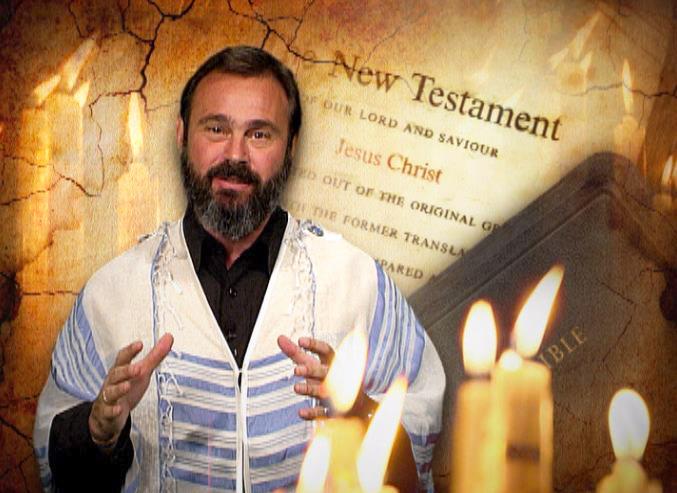
| "Rabbi" Ralph Messer |
The Sacred Name Movement (SNM) is a movement in Christianity that seeks to conform Christianity to its Hebrew Roots in practice. The best known distinction of the SNM is its belief in the use of a proper name for the God of Israel (YHVH/Yahweh) based upon the Tetragrammaton and the use of the Hebrew name of Jesus (Yashua). SNM believers also generally keep many of the Old Testament laws and ceremonies such as the Torah festivals and keeping kosher food laws. However, not every ‘Sacred Name’ Group adheres to Old Testament festivals, dietary laws and other mitzvot.
The term “sacred name” is not exclusive to this movement but is a general theological term in Christianity – a translation of the Latin nomen sacrum – as well as being paralleled by concepts in many religions such as the Māori concept of a tapu name for a person or god.
The Sacred Name Movement arose in the early 20th century out of the Adventist movement. C. O. Dodd, a member of the Church of God (Seventh Day Adventists), began keeping the Jewish festivals (including Passover) in 1928 and adopted sacred name doctrines in the late 1930s. Dodd began publishing The Faith magazine starting in 1937 to promote his views. It is currently freely distributed by the Assembly of Yahweh, the oldest of any still existing Sacred Name Assembly. Renowned scholar of American religions J. Gordon Melton wrote of the magazine, “No single force in spreading the Sacred Name movement was as important as The Faith magazine.”
The Movement started with the formation of the Assembly of Yahweh in Holt, Michigan, USA in the early 1930s. The leaders of this group claim that a founding member was visited by two angels who explained that The Messiah’s Name is properly Yahshua. This occurred around the time that interest in the subject was keen.The Assemblies of Yahweh, Bethel, PA, was begun by Jacob O. Meyer, after ordination by members of the Assembly of Yahweh. Over time, The Bethel organization became independent of the Michigan group, and expanded their national outreach.
An evangelist and prominent Minister in the Assemblies of Yahweh Donald Mansager split from the Assemblies of Yahweh and formed Yahweh’s Assembly in Messiah in 1980. Mansager left that organization in dispute over the handling of an adultery scandal, involving a prominent minister in that group. He then formed Yahweh’s New Covenant Assembly in 1985. The name was changed to Yahweh’s Assembly in Yahshua after an internal split in 2006. Alan Mansager and his father parted ways as Alan disagreed with his father on the scriptural qualifications for ordaining ministers. Alan formed Yahweh’s Restoration Ministry.
Robert Wirl split from the Assemblies of Yahweh, Bethel, and formed Yahweh’s Philadelphia Truth Congregation in 2002. It can be argued that all the above groups are a “Sacred Name group”, as they all have ties to the original “Assembly of Yahweh” and have almost identical doctrines. Because there is no formal enrollment to be a “Sacred Name group,” the term is loosely defined. Many people include groups that use variations of “Yahweh” and “Yahshua”, but teach very different doctrines than the above groups, to be “in the movement”.
There are countless groups with no established ties to the Assembly of Yahweh, Holt Michigan. One of the better-known includes The Assembly of Yahweh 7th Day in Cisco, TX, which developed their liturgy under their own leadership. They have extensive dealings with the mainstream Sacred Name groups listed above, exemplified by the fact that they host the Unity Conference every year. Their doctrines differ from mainstream Sacred Name doctrines such as using the vernal equinox to calculate their calendar, rejecting the pre-existence of Yashua (commonly called Jesus) and differing views on the application of Sabbath rest.

The Assemblies of Yahweh, Bethel, PA, and the House of Yahweh each maintain an exclusive flavor to their fellowship patterns, and have distanced themselves from the mainstream of the movement. It is rare for a member of either of these two organizations to personally have dealings with Sacred Namers on the outside. The Assemblies of Yahweh (Bethel) still has many beliefs and practices in common with the Movement, while the House of Yahweh has evolved a liturgy and a doctrinal system that is considered unorthodox.
Angelo Traina, a disciple of Dodd, undertook the writing of a Sacred Name edition of the Bible, publishing the Holy Name New Testament in 1950 (see Tetragrammaton in the New Testament) and the Holy Name Bible in 1962, both based upon the King James Version but replacing “God” with “Elohim”, “LORD” with “Yahweh” and “Jesus” with “Yahshua”. A distinction of the Sacred Name Movement has been the use of such Sacred name Bibles, others having been produced since Traina’s. source:
_________________________________________________________________________________
Jacob Barclay writes: The topic of Nazarenes in your website proceeds to refer to the English form JESUS from Latin IESVS [Iesus] from Greek Iησους ΙΗΣΟΥΣ Iesous is from the Septuagint form of the Hebrew ישוע Yeshua’ in these verses 2 Chr 31:15 Ezra 2:2, 6. 36. 40; 3:2,8, with no link whatsoever with the name ZEUS. Any individual claiming that ‘Jesus’ is a form or derivative of Zeus might as well have made the same claim for the Jews in Alexandria who translated the Pentateuch and later all the other books from Hebrew to Greek.
Uninformed individuals who post such statements on the internet are ignoramuses,
Uninformed individuals who post such statements on the internet are ignoramuses,
Jacob Barclay
Wednesday, 28 March, 2012
======================
Wednesday, 28 March, 2012
======================
Editor’s Note: Secular history records that many Greek intellects studied the Hebrew Torah after the translation into Greek [Septuagint]. As you may be aware there were 70 Hebrew Scribes that were conscripted to translate the Hebrew Torah into Greek in which 70 books [Septuagint] were kept at the great Alexandria library. As a result many Greek intellectuals converted to Hebrew Judaism during those times. None of these Greek converts were ancestors of the Twelve tribes of Israel [the Israelites]. However because they converted to the Hebrew religion [Hellenistic Judaism] were also called Jews by the Romans and eventually Christians.
Further the Hebrew Scribes were masters of many languages during those times.
The Latin version [Vulgate] of the “Bible” was translated from the Greek [Septuagint] between A.D. 383 and 405. long after the times of “Jesus”. The Latin version was revised and edited many times by the Roman Catholic church which was the authority of Christians for centuries. One of these versions may be what you are referring to. Add to this the name Jesus is not and never has been a Hebrew name. Further there is no Hebrew documentation of such a person by the name of Jesus during those times. Jesus, the man and his family and friends were likely members of Hellenistic Judaism which came about during the times of Alexander the Great. The Greeks often referred to Jesus as a god like Jupiter and Zeus.
Of interest there have been many Holy Rabbi’s and Jews throughout all the centuries of both the common era and before the common era, that have miraculous gifts far beyond those described of the mysterious “Jesus”. Hence these types of miracles are common amongst the Jews, even today. You can be sure that if such a person by the name of “Jesus” as described in the New Testament it would be apparent that all of the details would have been recorded by the Hebrew Rabbi’s.
Rabbi Tovia Singer [Outreach Judaism} would be a person of interest for you to contact. You have much history to learn.
http://www.outreachjudaism.org/
http://truetwistianity.blogspot.com/2013/01/new-age-messianic-christian-sects.html
http://truetwistianity.blogspot.com/2013/01/new-age-messianic-christian-sects.html


